A technical perspective for automation engineers, SCADA engineers, technical managers, and system integrators in the GCC
Why Having a World Class HMI Still Matters in Modern Industrial Operations
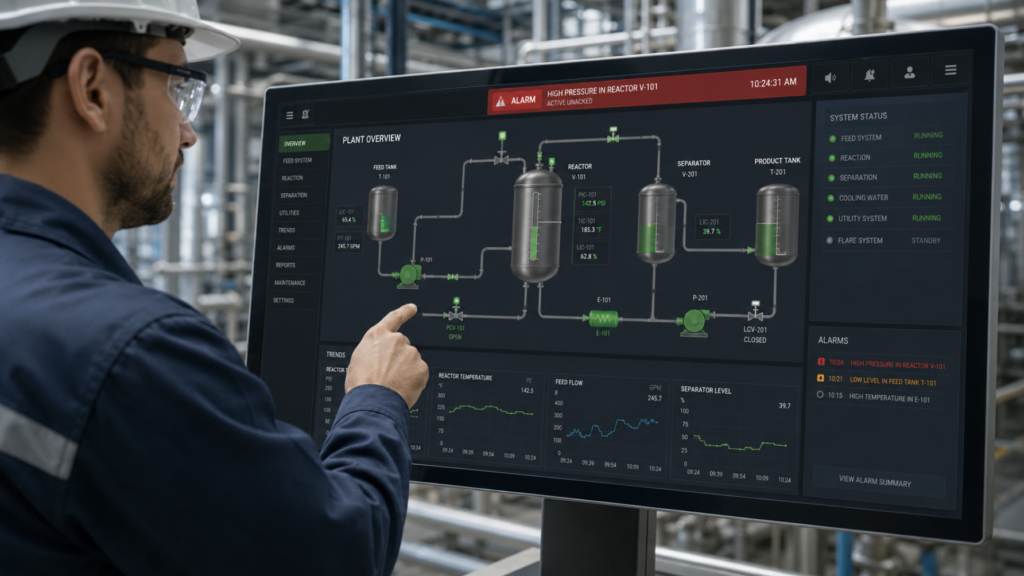
In many industrial environments, the operator does not experience the plant through PLC logic, engineering drawings, database tables, or management dashboards. The operator experiences the plant through the HMI.
That is why Human Machine Interface software remains one of the most important layers in industrial automation. A well-designed HMI does more than display process values. It helps operators understand the condition of the plant, recognize abnormal situations, respond faster, and make better decisions during daily operations.
AVEVA InTouch HMI has been one of the most recognized industrial visualization platforms for decades. It is world class visualization software that helps operators interact with industrial automation systems and optimize industrial and manufacturing processes. The solution gives users real-time operations visibility and process monitoring and control.
For technical managers and automation engineers, the discussion today is not only whether an HMI is “working.” The more important question is whether the HMI is helping the operation become clearer, more maintainable, more scalable, and more responsive.
The HMI Is Still the Operator’s Front Line
Industrial operations are becoming more connected and data-rich. Plants now include more devices, more signals, more production data, more quality requirements, and more expectations for reporting and visibility.
But even with all this digital progress, the operator still needs a clear interface.
When a pump trips, a batch phase delays, a packaging line stops, or a water treatment process goes outside normal conditions, the operator needs to understand the situation quickly. The HMI becomes the first operational window into what is happening.
A weak HMI can create confusion. It may show too much information, use inconsistent graphics, hide critical alarms, or make navigation difficult. In these cases, the HMI becomes a source of noise instead of a source of clarity.
A strong HMI helps the operator answer practical questions:
- What is running?
- What is stopped?
- What requires attention?
- What changed recently?
- Where should I look next?
- What action is expected?
This is where AVEVA InTouch stands out from the crowd. Its value is not only in creating screens. Its value is in helping industrial teams build a reliable visualization layer between automation systems and human decision-making.
“The operator experiences the plant through the HMI.”
From Screens to Operational Visibility
One common mistake in HMI projects is thinking that the objective is to create attractive screens. Visual quality matters, but HMI engineering is not graphic design only.
The real objective is operational visibility.
A good HMI application should help operators understand process status, equipment behavior, alarms, trends, and abnormal conditions. It should reduce unnecessary searching and make the most important information visible at the right time.
This requires engineering discipline. Screen hierarchy, navigation, color usage, alarm presentation, object consistency, tag organization, and trend access all affect the operator experience.
For example, a production line screen should not simply show every sensor and motor. It should help the operator understand line status, bottlenecks, stoppages, faults, and the next action required. A water system screen should not only show pumps and tanks. It should help operators understand level conditions, pump availability, flow behavior, and abnormal states. In a pharma or food and beverage environment, the HMI should support repeatable operation, process visibility, and controlled operator interaction.
When HMI applications are designed with this mindset, they become part of operational performance — not only part of the control system.
|
PLC / Field Devices |
|
Communication Layer |
|
AVEVA InTouch HMI |
|
Operator Visualization |
|
Faster Response / Better Awareness |
Why Technical Teams Still Need Strong HMI Engineering Standards
HMI applications are often created under project pressure. The system must be delivered, tested, commissioned, and handed over. Under this pressure, teams sometimes focus only on getting the application running.
That may work in the short term, but weak engineering standards create long-term problems.
Common issues include:
- Inconsistent tag naming
- Repeated graphics with small manual differences
- Overloaded screens
- Poor navigation between process areas
- Unclear alarm presentation
- Excessive scripting without proper structure
- Limited documentation
- Applications that are difficult to expand or maintain
For technical managers, these issues become lifecycle risks. A poorly structured HMI may still operate, but every future modification becomes slower and riskier. New engineers need more time to understand the system. Troubleshooting becomes harder. Expansion becomes more expensive.
|
Issue |
Impact |
|---|---|
|
Inconsistent tag naming |
Harder troubleshooting and maintenance |
|
Repeated graphics with small manual differences |
More engineering errors |
|
Overloaded screens |
Slower operator understanding |
|
Poor navigation |
More time searching for information |
|
Unclear alarm presentation |
Slower response to abnormal conditions |
|
Excessive scripting without structure |
Higher lifecycle risk |
|
Limited documentation |
Difficult handover and support |
Modern HMI engineering should aim for consistency and maintainability. This includes structured tags, reusable design elements, clear screen standards, meaningful alarms, and disciplined application organization.
AVEVA InTouch has these engineering efficiency principles built in, including scalable vector graphics import, OPC UA data source workflows, and user-defined types that support a more structured and reusable approach to development.
For engineering teams, this matters because every hour saved in development, testing, troubleshooting, and future modification has direct operational value.
Where AVEVA InTouch HMI Unlimited Enters the Conversation
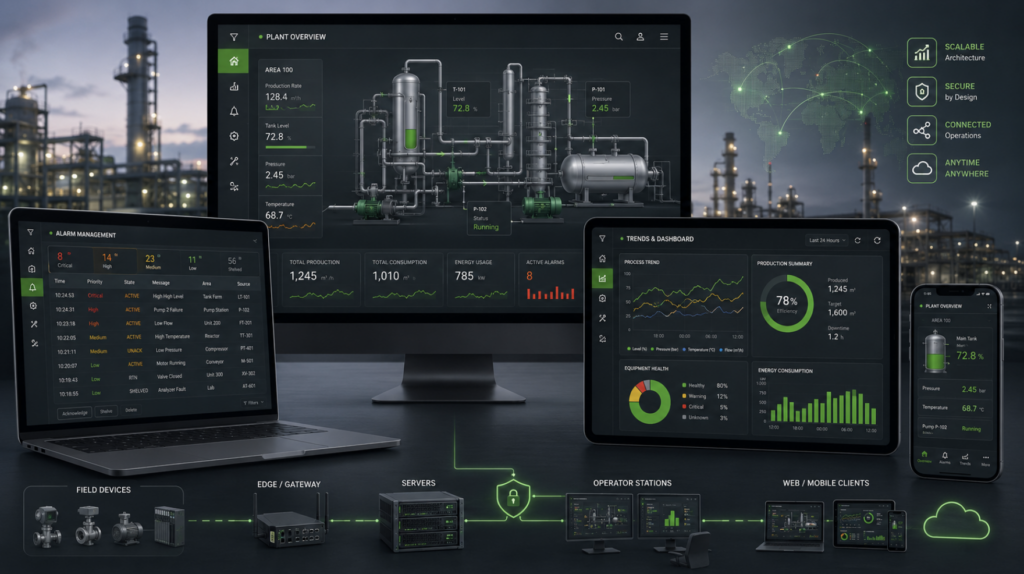
Many industrial sites start with a simple requirement: one HMI station, one process area, one machine, or one production line. Over time, the requirement grows.
The site may need more tags, more clients, more operators, more engineering access, more reporting, more web visibility, or more integration with other systems. What started as a local HMI requirement can become a broader operations visibility requirement.
This is where AVEVA InTouch HMI Unlimited becomes important.
AVEVA InTouch Unlimited gives users access to unlimited tags, clients, and architectural flexibility. It is a complete solution for building a modern, web-enabled HMI/SCADA platform.
For technical managers, this changes the conversation. Instead of asking only, “How many tags do we need today?” the better question becomes:
“How do we build an HMI/SCADA platform that can grow with our operations?“
That question is especially important in the GCC, where many industrial facilities are expanding, modernizing, integrating distributed assets, and improving operational visibility across plants and sites.
AVEVA InTouch HMI Unlimited can support a more scalable discussion around industrial visualization, web access, engineering flexibility, and future growth. The value is not only commercial. It is architectural.
Practical Relevance for CPG/F&B, Pharma, and Water
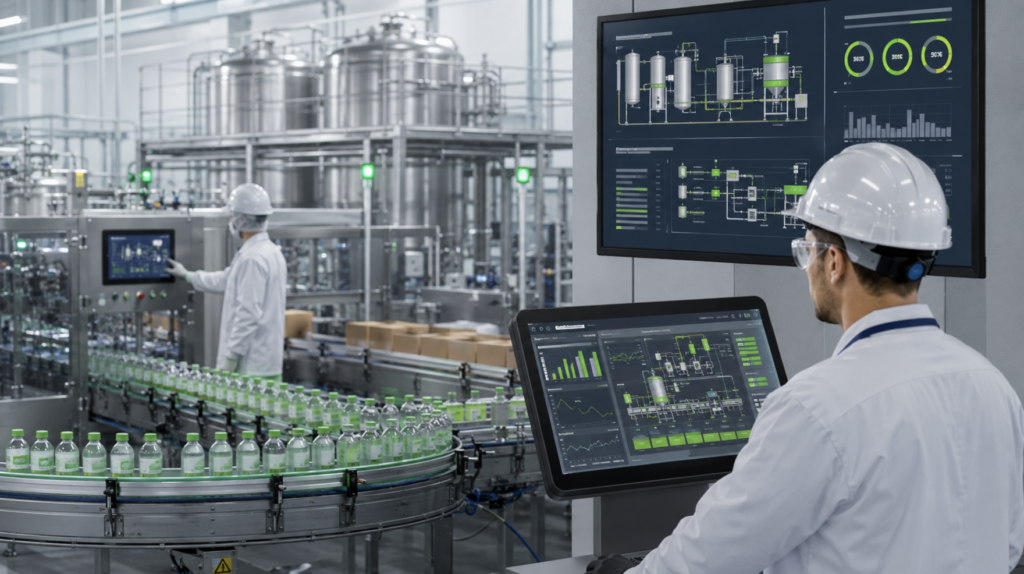
Although AVEVA InTouch is product-focused and widely applicable, several industries can benefit clearly from strong HMI engineering.
In CPG and food & beverage, operators need visibility across production lines, packaging equipment, tanks, utilities, downtime events, and process conditions. A good HMI can help teams understand line performance, equipment status, stoppages, and production flow.
In pharma, HMI discipline is especially important because operations are quality-sensitive. Operators need clear process states, equipment visibility, controlled interactions, and consistent screen behavior. The HMI should support repeatability and reduce ambiguity during operation.
In water and wastewater, operators often manage pumps, reservoirs, treatment units, remote stations, and distributed assets. HMI clarity helps teams monitor abnormal conditions, respond to alarms, and understand the status of critical infrastructure.
Across these industries, the common requirement is the same: operators need clear, reliable, and scalable visualization.
Signs Your Current HMI Needs Attention
Technical teams should review their HMI applications regularly, especially when systems have been operating for many years or have grown through multiple project phases.
Your HMI may need attention if:
- Operators rely on memory instead of clear-screen guidance.
- Screens contain too much information without clear priority.
- Alarms are noisy, unclear, or poorly organized.
- Tag names and graphics are inconsistent.
- Navigation between screens is difficult.
- The application is hard to modify or expand.
- Engineering teams avoid changes because the structure is unclear.
- Management needs more visibility than the current system can provide.
- Web or remote visibility is becoming a requirement.
- The current architecture cannot easily support future growth.
These signs do not always mean the system must be replaced immediately. Sometimes the right step is a review, cleanup, upgrade, or modernization roadmap.
The important point is this: an HMI should not be evaluated only by whether it still runs. It should be evaluated by whether it still supports the way the operation needs to work today and tomorrow.
Conclusion: A Working HMI Shows Data. A Well-Engineered HMI Supports Better Operation.
AVEVA InTouch is the HMI you should be talking about, because industrial operations depend on clear visualization, reliable operator interaction, and fast understanding of plant conditions.
For automation engineers, AVEVA InTouch remains a practical platform for building and maintaining industrial HMI applications. For technical managers, it supports a broader conversation around maintainability, scalability, modernization, and operational visibility.
With AVEVA InTouch Unlimited, the conversation expands further — from individual HMI applications to scalable HMI/SCADA architecture, web-enabled visibility, and future-ready operations.
In modern industrial environments, the objective is not simply to display process data. The objective is to help people operate better.
“A working HMI shows data. A well-engineered HMI helps operators make better decisions.”